


How does mold form on walls? 3 causes and a permanent solution
A black coating in the corner of a bedroom often appears after replacing windows or insulation, just when the house should be in its best condition. How does mold form on walls when everything is new? All it takes is warm, moist air touching a cold wall. In this article, you'll learn how to identify the real cause, how to remove the mold, and how to dry out the space so it doesn't come back.
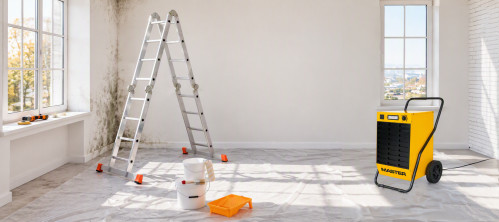
Why does mold form on walls?
Mold only needs three things: moisture, moderate temperature and a breeding ground. These are dust, plaster, wallpaper and regular paint. You can always provide it with warmth and food at home. So the key is moisture, not the humidity of the air in the room, but the humidity directly on the wall surface.
Dew point: when air turns into water
The dew point is the temperature at which water vapour in the air turns into droplets. At a room temperature of 20°C and a relative humidity of 60%, this is approximately 12°C. If any part of the wall is below 12°C, water will start to condense on it, even if you cannot see it with the naked eye. If the wall surface remains damp for several days (relative humidity at the surface around 80% or more), mould spores will start to grow.
Thermal bridges: cold spots in the wall
A thermal bridge is a place where heat escapes from a house faster than through the surrounding structure. It is usually found above a window at the lintel, at the corners of exterior walls, at the ceiling cornice, or behind a cabinet that is close to an exterior wall. These places are several degrees cooler than the rest of the wall in the winter. That is why mold almost always appears there first.
Insufficient ventilation after insulation and window replacement
The old windows were not sealed and the house "ventilates" itself. New plastic windows and an insulated facade stop this leakage. Moisture from cooking, showering, drying laundry and breathing (a household of four produces approximately 8 to 12 liters of water per day) then remains inside. What causes mold on the walls in newly insulated houses? Most often, this mismatch: the tight shell of the house and the original ventilation habits.
How to recognize the cause: condensation, leaks or rising damp
Before you start removing it, find out where the water is coming from. Each of the three main causes has different causes, and a misdiagnosis means the mold will return in a few weeks.
Condensation appears as spotty mold in corners, behind furniture and on windows, most often in winter. The spots do not have sharp edges and you often see foggy windows in the morning. The cause is the air in the apartment, not the structure.
Leaks form limited spots with yellow-brown edges, usually under the roof, near the balcony or under the window. The spot enlarges after rain, regardless of the season. Neither ventilation nor a dehumidifier will help here until the roof, sheet metal cladding or window sill are repaired.
Rising damp rises from the ground through masonry that does not have functional waterproofing. You will see it as a damp strip at the bottom of the walls, about 30 to 100 cm high, often with white salt blooms and falling plaster. It is typical of older houses and basements.
What doesn't work: spraying and repainting alone
The most common mistake is this: spray the product, wait for the stain to fade, and repaint the wall. After two months, the mold returns, sometimes even under new paint. The spray destroys the surface layer, but the mold fibers go deeper into the plaster and the cause remains.
Painting over a damp wall makes the problem worse. The paint traps moisture in the plaster, creating ideal conditions for further growth. When asked what really works on mould on walls, the answer is always the same: remove it and remove the source of the moisture.
How to remove mold from a wall step by step
You can handle smaller areas up to approximately 1 m² yourself. If the mold is more extensive, returns despite the measures taken, or there is an allergy or asthma sufferer living in the household, call in a professional.
Safety first
Mold spores irritate the respiratory tract, so wear an FFP2 respirator, rubber gloves and safety glasses when working. Ventilate the room while working and close the doors to other rooms. Never mix chlorine products with vinegar, acids or ammonia, as this produces toxic gases.
Removal procedure
- First, moisten the affected area so that the spores do not spread while you work.
- Apply an antifungal (antifungal) product and let it work as directed, usually 15 to 30 minutes.
- Remove the softened coating with a spatula or brush. If the mold has penetrated deeply, scrape off the plaster as well.
- Let the wall dry completely. This is a step that most people skip.
- Treat with the product again and apply antifungal, vapor-permeable paint to the dry surface.
However, the key to permanently removing mold from a wall is not the four steps with chemicals, but the fourth: thorough drying.
How to dry out the space so that the mold doesn't return
Plaster after leaks or long-term condensation contains a large amount of water. Ventilation alone in damp weather in autumn or winter dries it out for weeks. Technology can do this faster and more reliably.
Dehumidifier: the basis of drying
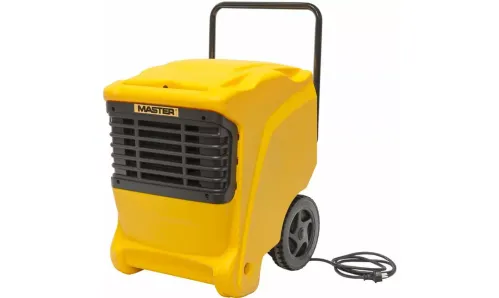
A condensation dehumidifier draws in air, cools it, and collects the water in a container or drains it through a hose into the drain. Professional devices with a capacity of 40 to 59 liters per day are sufficient for an apartment or a smaller house after flooding. Devices with a capacity of 60 or more liters per day are designed for new buildings, fresh plaster and screed, or flooded basements. If you don't know what capacity to choose, the article How to choose a dehumidifier for construction or the home will help you, which compares devices according to the type of space and the required drying speed.
Hot air drying
Warm air holds more moisture, which evaporates from the walls more quickly. This makes a combination of a heater and a dehumidifier more effective than either device alone. First, warm up the space slightly, then let the dehumidifier run in a closed room so it doesn't dry out the air in the entire house.
Air circulation
The air near the walls, especially in corners and behind furniture, stagnates. A fan directed at the damp surface constantly changes it and accelerates evaporation. During drying, move the furniture away from the wall by at least 5 to 10 cm.
Practical example: a family from Trnava insulated their family home in the summer and replaced the windows. In January, black spots appeared in the corner of the children's room and behind the wardrobe in the bedroom. The hygrometer showed 72% in the rooms. After removing the mold, they let a rented dehumidifier with a capacity of around 50 liters per day run for five days, which pumped several liters of water out of the air every day. When they started to ventilate regularly, the humidity stabilized at around 50% and the mold no longer appeared.
Specific situations
Mold in the bathroom
The bathroom produces the most steam in the entire apartment in a short period of time. If you want to know how to remove mold in the bathroom from the joints, use a product designed for silicones and joints. It is better to cut out and replace heavily attacked silicone, because the mold grows through the entire mass. After each shower, wipe the walls of the shower enclosure, let the fan run for at least 15 minutes and open the door a little.
Humidity in the cellar
If you are considering how to remove moisture from your basement, first check whether it is rising damp or condensation. In the summer, warm outside air cools below the dew point in a cold basement, so ventilation during hot days paradoxically increases humidity. Ventilate in the morning or at night when it is cooler outside. In the case of rising damp, additional waterproofing will help, in which case a dehumidifier is only a temporary solution.
High humidity in the house
What should the humidity in the apartment be? In living rooms, 40 to 60% at a temperature of 20 to 22 °C is recommended, in the bedroom, the lower limit. A value above 60% for a longer period of time is a warning sign. How to reduce humidity in the house without technology? Do not dry laundry in the rooms, use a hood with exhaust to the outside when cooking, and do not turn off the heating completely in unused rooms.
Prevention in winter
Winter is the time when mold grows the fastest because the temperature difference between the interior and the wall is the greatest. Instead of ventilating all day with the windows open, do burst ventilation: 3 to 4 times a day for 5 to 10 minutes with the windows wide open, ideally with a draft. This will allow air to circulate but will not cool the walls.
Keep the temperature throughout the house at least 18°C, even in unused rooms. Do not place cabinets and sofas close to the outside walls. For 10 to 20 euros, buy a hygrometer. In a few days, it will show you which room is the problem, and you can react before the first stain appears on the wall.
What solutions can you find at Ramirente?
If you need to quickly dry out a space after flooding, renovation or mold removal, buying your own professional equipment is not worth it for a few days. In the Dehumidifiers category at Ramirente , you can rent a dehumidifier with a capacity of 40–59 l/day for apartments and smaller houses or a dehumidifier with a capacity of 60 l/day and more for new buildings, cellars and larger spaces. The rental price starts at approximately €18 excluding VAT per day.
For hot air drying, you will find electric heaters and for air circulation, fans . Your nearest branch will advise you on the choice of power.
Frequently asked questions
Yes, especially for children, seniors, allergy sufferers and asthmatics. Spores irritate the respiratory tract and can cause coughing, runny nose, headaches or worsening asthma. Therefore, do not remove it dry and always wear a respirator when working.
It depends on the thickness and absorbency of the masonry. For normal condensation, a few days are enough, for a wall that has leaked, it can take 1 to 3 weeks. A combination of a dehumidifier, heater and fan will shorten this time.
Vinegar may help for a short time on small surface stains, but it is not enough for plaster where the mold has penetrated deeper. It is much more important to eliminate the cause of the moisture. Otherwise, the mold will return no matter what product you use.
CONCLUSION
When you understand how mold forms on walls, it becomes clear that chemical agents only address the consequences. You will achieve lasting results if you identify the source of moisture, dry the wall thoroughly, and ventilate and heat properly in winter.